

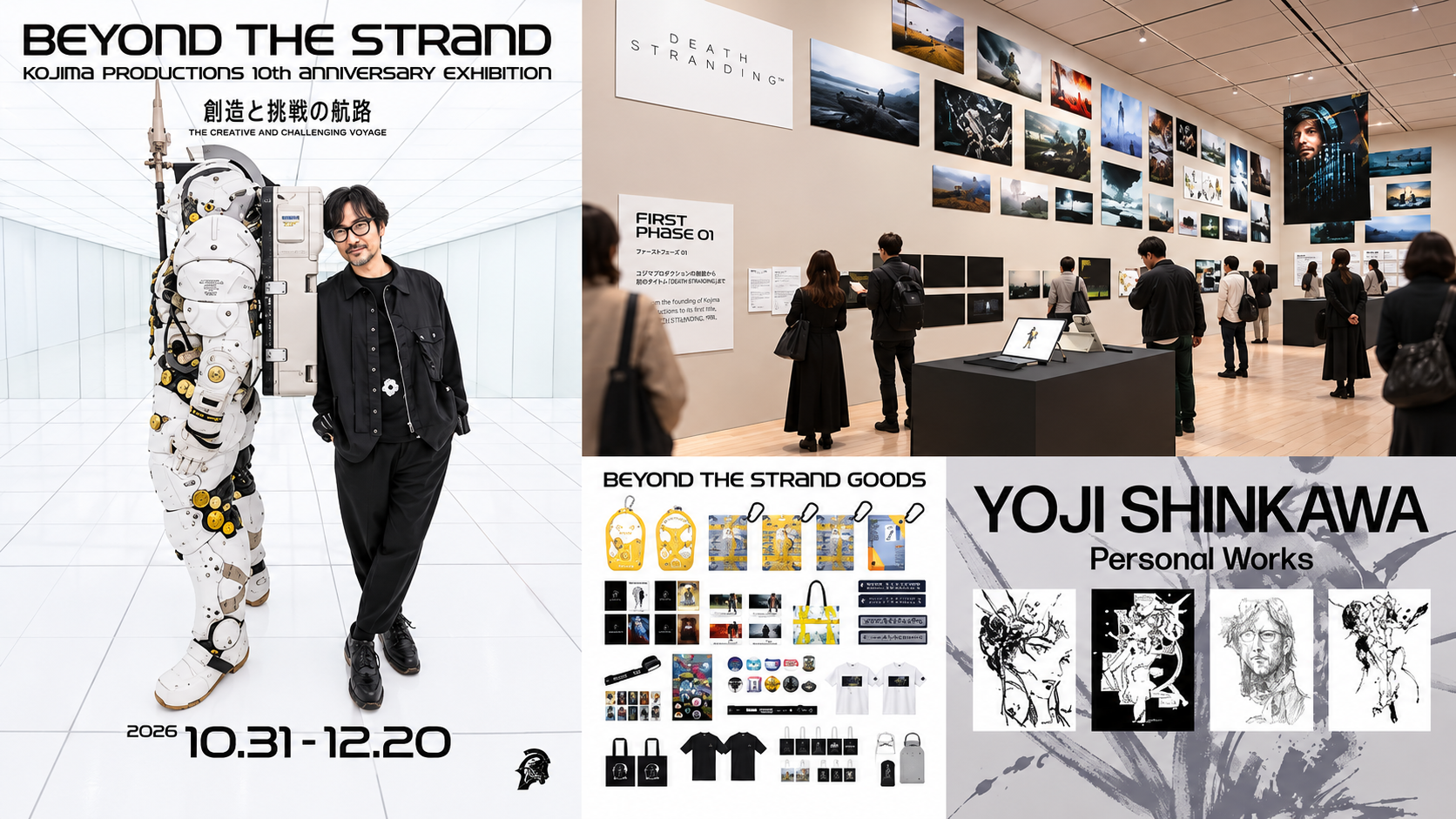
Hideo Kojima, the acclaimed creator of Metal Gear and DEATH STRANDING, has shared concerns about the growing role of artificial intelligence in creative industries. While acknowledging AI’s potential to improve efficiency, the game director believes its convenience could come at the expense of the enjoyment of making something.
In an interview with Game*Spark during a media preview on October 30, ahead of Kojima Productions’ 10th Anniversary Exhibition, Kojima discussed how AI tools could change the way creators approach their work.
Kojima Says the Creative Process Matters
Kojima acknowledged that AI can help creators work more efficiently and meet deadlines sooner. He compared its impact to the introduction of digital tools such as Photoshop and word processors, which changed how people produce creative work.
However, he emphasized that the satisfaction of creating something comes from the process itself—not simply from completing the final product.
Using drawing as an example, Kojima explained that asking a computer to create something and repeatedly requesting adjustments does not sound particularly interesting to him. He compared this to building model kits, completing jigsaw puzzles, and assembling LEGO sets, where the enjoyment comes from putting the pieces together.
For Kojima, experimentation and trial and error are essential parts of creative work. He argued that producing a finished product and enjoying the process of making it are not necessarily the same experience.
Concerns About AI’s Future in Creative Industries
The director also expressed concern about a future in which AI takes on a much larger role in creative work. He suggested that the next five to ten years should be manageable, but warned that unrestricted AI development could eventually reshape the creative landscape.
Despite these concerns, Kojima did not dismiss AI entirely. He acknowledged that the technology could help create a better future, depending on how people choose to use it.
His comments reflect a broader question facing creative industries: how can new tools improve productivity without removing the experimentation, personal effort, and satisfaction that make the creative process meaningful?












Leave a Reply