
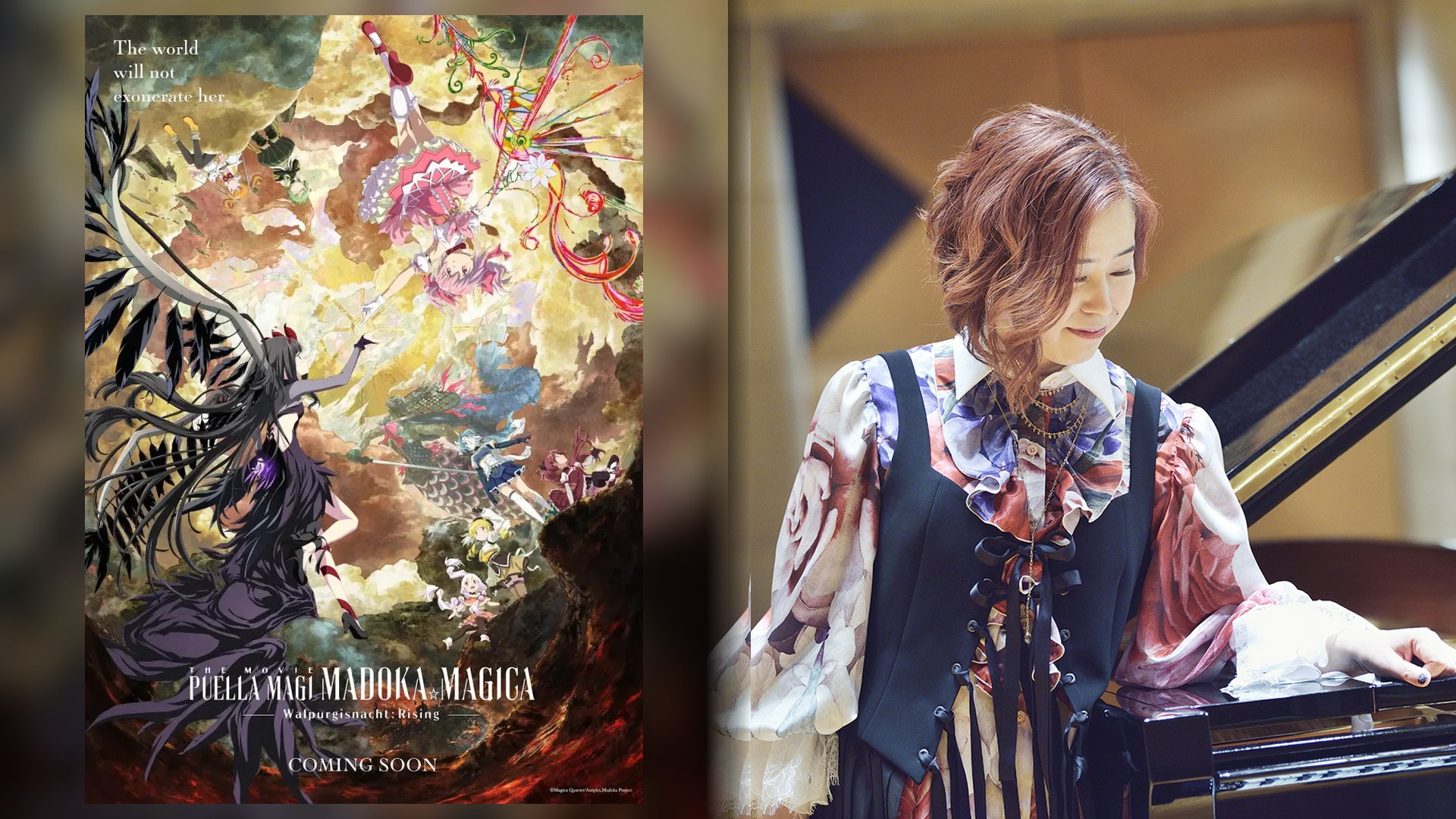
This time, we will be interviewing Yuki Kajiura, the composer behind the music of Puella Magi Madoka Magica since the series first premiered in 2011.
The interview is scheduled to take place on August 29 at 10:00 AM JST. During the session, we will discuss her musical contributions to the franchise and the creative process behind the distinctive sound that has helped shape the world of Madoka Magica.
| No. | Interview Question | Predicted Answer (English) |
|---|---|---|
| 1 | How did you and the production team initially define the musical identity of Madoka Magica? | “From the beginning, I wanted the music to reflect the contrast between the seemingly innocent world of magical girls and the darker reality hidden beneath it. I explored a combination of beautiful melodies, unusual harmonies, choral elements, and sounds inspired by different musical traditions. Rather than relying entirely on conventional orchestral music, I wanted to create a sound that felt both familiar and strangely otherworldly. Ultimately, the music needed to support the atmosphere of the story while giving Madoka Magica an identity of its own.” |
| 2 | What challenges did you face when composing musical motifs for characters with tragic destinies? | “One of the greatest challenges is expressing a character’s emotions without revealing too much about their future. I believe music can communicate feelings that dialogue alone cannot express, but it is important not to make every moment overly dramatic. Sometimes, a beautiful melody can become even more heartbreaking when the audience understands what lies behind it. I try to give each character a musical identity that reflects their personality, hopes, and inner conflicts, allowing those themes to take on new meanings as the story progresses.” |
| 3 | How did you approach the music for Walpurgisnacht Rising compared with the TV series and Rebellion? | “For Walpurgisnacht Rising, I wanted viewers to feel that they had returned to the world of Madoka Magica, while also recognizing that the story had entered a new stage. I revisited the musical identity established in the previous installments, incorporating familiar character themes while exploring different approaches for the new film. One of the challenges was that the story involves multiple characters and increasingly ambiguous situations. I therefore tried to create music that complemented the visuals without necessarily telling the audience how they should interpret every scene.” |
| 4 | How did you translate the threat of Walpurgisnacht into a grand yet unsettling musical arrangement? | “I think the most effective way to express a powerful threat is not always to make the music louder or more dramatic. The atmosphere surrounding a character or an event can sometimes be more frightening than the confrontation itself. I would approach such moments by combining a strong musical presence with unusual harmonies, layered textures, and carefully controlled tension. The goal would be to convey the scale of the conflict while preserving the mysterious and unsettling qualities that make Walpurgisnacht such a memorable presence in the series.” |
| 5 | How did Gekidan Inu Curry’s visual style influence your compositions for the Witches’ Labyrinths? | “The visual world of Madoka Magica offers an extraordinary amount of artistic freedom. Its surreal imagery and unconventional presentation allow the music to move beyond the boundaries of a traditional fantasy soundtrack. When working with such visuals, I would pay close attention to the rhythm, atmosphere, and emotional impression of each scene. Rather than simply illustrating what appears on screen, the music should become another layer of the experience, creating a world in which beauty, discomfort, and mystery can coexist.” |
| 6 | Did you introduce any new instruments, Kajiurago vocal techniques, or musical genres specifically for Walpurgisnacht Rising? | “I believe it is important to remain open to new musical possibilities whenever I work on a new installment. At the same time, introducing something entirely different is not necessarily the goal. The sounds and vocal techniques used in Madoka Magica have become an important part of its identity, so I would prefer to develop those elements according to the needs of the story. Unusual vocal textures, distinctive harmonies, and combinations of acoustic and electronic sounds can all contribute to the atmosphere, provided that they serve the film rather than becoming the main attraction.” |
| 7 | Will the vocal group FictionJunction disband after Madoka Magica: Walpurgisnacht Rising? | “I don’t think completing the music for a particular film necessarily means that FictionJunction has reached its conclusion. FictionJunction is closely associated with Yuki Kajiura’s musical projects, and its activities are not limited to a single anime franchise. I would therefore expect its future to depend on Kajiura’s musical plans and upcoming projects rather than the conclusion of Madoka Magica alone. Unless an official announcement confirms otherwise, there is no sufficient basis to conclude that FictionJunction will disband after the film.” |









Leave a Reply