

Japanese manga titles have become significantly longer over the past 15 years, according to a new analysis published by Japanese e-book distributor and publisher BookLive. The study examined changes in the manga market from 2011 to 2026, covering title lengths, frequently used keywords, and purchasing habits.
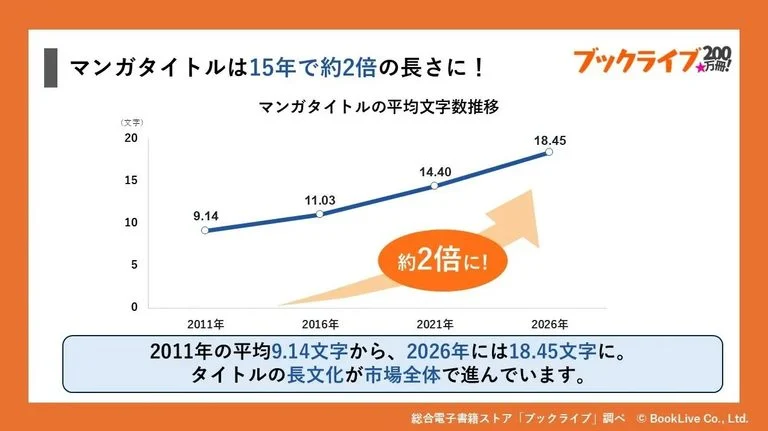
One of the most noticeable changes is the dramatic increase in title length. The average number of Japanese characters in the first volume titles rose from 9.14 characters in 2011 to 18.45 characters in 2026. The median also increased from eight to 16 characters.
The trend can be seen across different demographics. Manga aimed at male readers currently averages 17.11 characters per title, while titles targeting female readers are even longer, reaching an average of 19.46 characters.
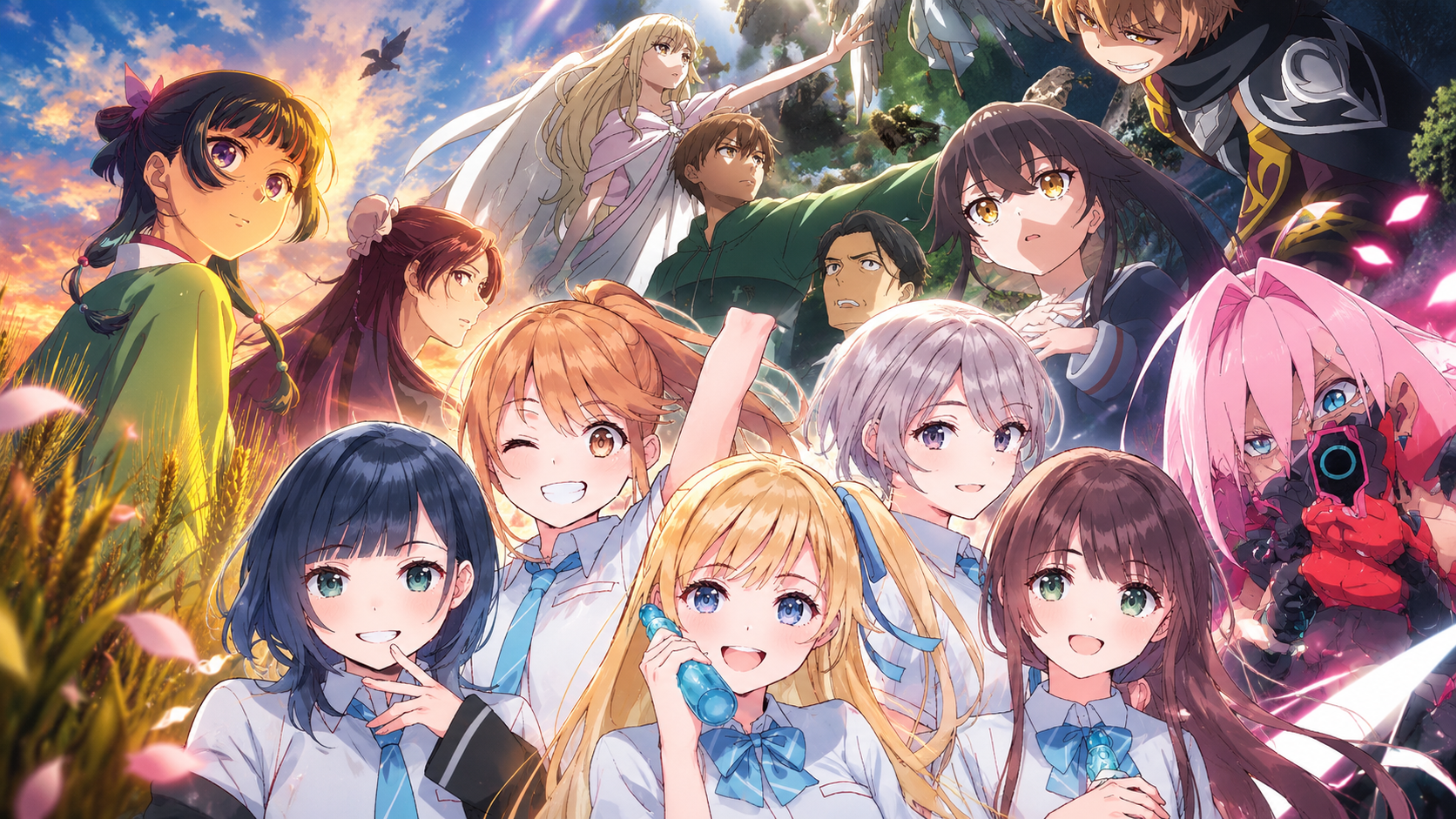
Popular series such as Suppose a Kid from the Last Dungeon Boonies Moved to a Starter Town, My Next Life as a Villainess: All Routes Lead to Doom!, and I’ve Been Killing Slimes for 300 Years and Maxed Out My Level demonstrate how manga titles can now function almost like short summaries of their stories.
According to BookLive, longer titles may reflect readers’ growing emphasis on time and spending efficiency. Descriptive titles can immediately communicate a manga’s premise, allowing potential buyers to understand what they are getting before making a purchase. The trend has also been influenced by the popularity of web novels, while descriptive titles can function similarly to searchable tags on digital bookstores.
The keywords appearing in popular manga titles have changed as well. Shonen and seinen works frequently feature terms such as “isekai,” “reincarnation,” and “strongest,” reflecting the popularity of titles that immediately communicate a protagonist’s setting or abilities.
Meanwhile, trends among shojo and female-oriented manga have shifted over time. Keywords such as “love,” “marriage,” and “romance” were common in 2016, while terms including “housewife,” “exploitative workplace,” and “neighborhood” became more prominent in 2019. Since 2021, words such as “young lady,” “villain,” “doting love,” and “saint” have appeared frequently among BookLive’s bestselling titles.
Reader purchasing habits have changed too. The Top 100 bestselling manga accounted for only 15.3 percent of annual sales, while approximately 85 percent came from titles outside that ranking. Furthermore, 42.9 percent of readers did not purchase any manga from the Top 100, suggesting that demand is increasingly distributed across a wider range of titles.
The average number of manga purchased per transaction also increased from 1.19 books in 2011 to 2.82 books in 2026. Average spending rose from 567 yen to 1,327 yen, with BookLive pointing to digital manga and discounts as factors that may encourage readers to purchase multiple volumes at once.






Leave a Reply