
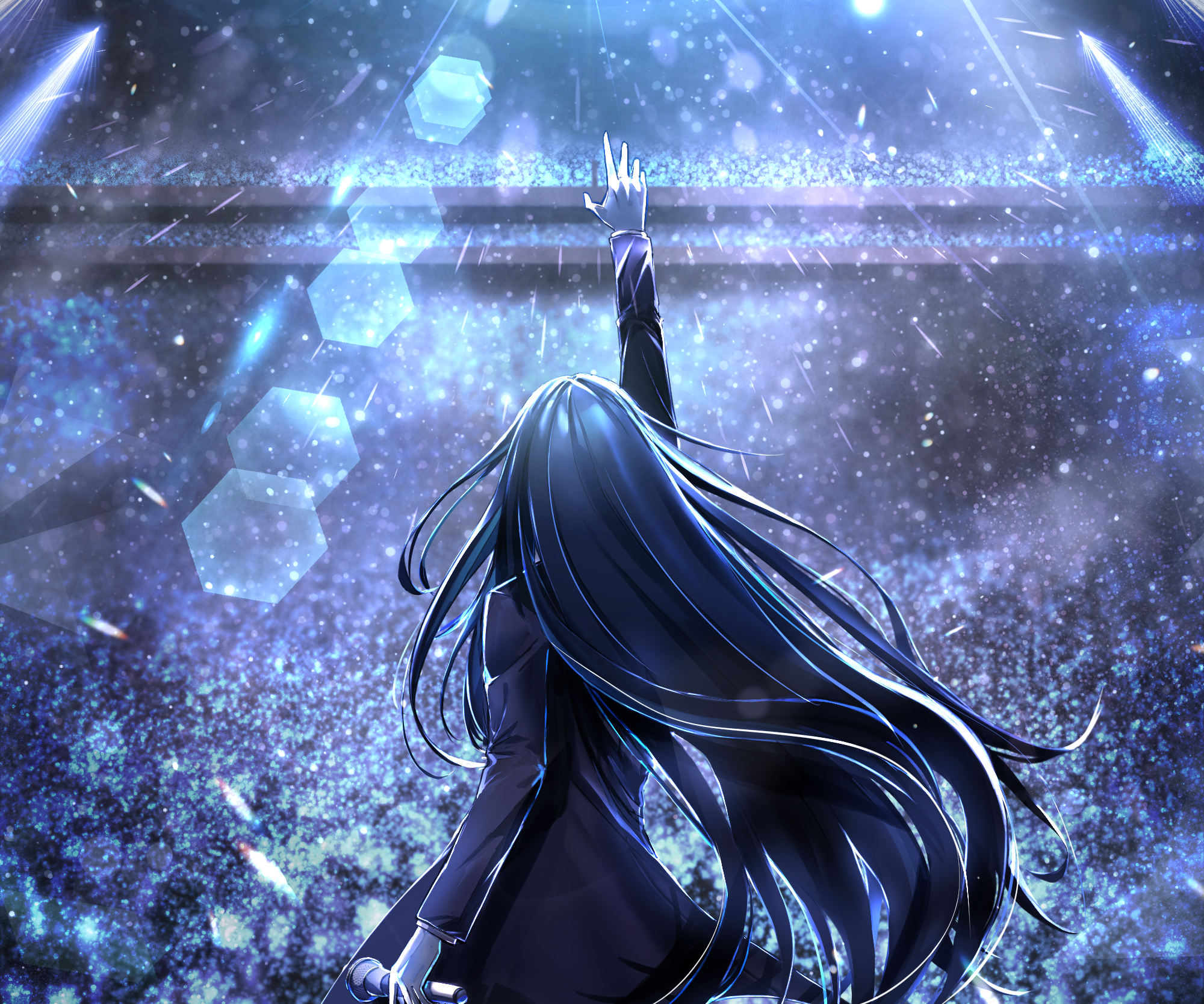
Ado once revealed a deeply personal message addressed to her parents at the end of her autobiography—a letter that reshaped how many fans understood her family story.
For a long time, some readers believed her relationship with her father had completely fallen apart. However, the closing pages of her book suggest something far more complex: pain, reflection, and ultimately reconciliation.
Titled simply “To Papa and Mama,” the message is both heartbreaking and tender.
Ado acknowledges that her parents were likely shocked and hurt by what she wrote about her childhood. Despite the repeated “I love you” she received growing up, she confesses that she continued to struggle with intense self-hatred. The emotional core of her letter reveals a young girl who felt inadequate—“incapable,” “useless,” and constantly questioning why she was even born.
She recalls vivid sensory memories from her childhood home: her mother’s heavy footsteps, the clinking of a glass on the table, the sound of TV variety shows, and even the piercing echoes of her parents’ arguments. These sounds lingered in her mind, shaping the anxiety she carried while growing up.
Moments of criticism stayed with her just as strongly. She remembers being scolded for reading manga biographies at seventeen and being told she couldn’t do anything properly. These words became internalized, feeding the insecurity that would later push her to retreat into music.
It was inside a closet that she began to sing.
There, she created a boundary—an alter ego named “Ado.” That persona became both her shield and her escape. By separating “Ado” from “Ao-chan,” the insecure girl she believed herself to be, she found a way to survive emotionally.
Yet the letter does not dwell only on pain.
Ado also shares warm and irreplaceable memories: being taken on drives in a yellow car with Disney music playing, watching Tom and Jerry DVDs, visiting Toshimaen, and falling asleep under a ceiling turned into a planetarium. She thanks her parents for singing lullabies, for not giving up on her when she refused to attend school, and for continuing to care even as she grew older.
Her message ultimately reflects a longing—not to erase the past, but to reconcile with it.
She admits that she was the one who ran away from “Ao-chan,” even though her parents never abandoned that version of her. No matter how famous the name Ado becomes, she writes, she hopes they will continue to see her as their daughter.
In the end, the letter is not about fame, conflict, or misunderstanding. It is about identity, forgiveness, and the slow journey toward self-acceptance.
“Just as you loved me,” she writes, “I want to try to cherish myself too.”










Leave a Reply